New to Church?
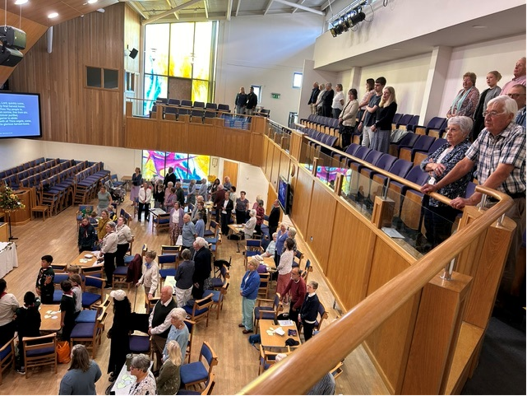
Here at Brighton Road Baptist Church, you will always be welcome. So it doesn’t matter whether you’ve never been to church before or have been going all your life and want to try something different.
No-one cares how you're dressed, what you believe (or don’t believe), whether you’re over 60 or under 6, or something in between - you're welcome to join us if you're searching or just browsing.
Whatever your circumstances BRBC is a safe place to discover God's love.
We are an extended family made of all ages and a variety of backgrounds. We are single, married, divorced, widowed, happy, sad, confused, motivated, those with time on their hands and those with no time at all. The one thing we have in common is that we want to know more about the God who welcomes us all into his family. We look forward to welcoming you.
What to expect on a Sunday morning:
Where and When
We meet at the Church Building (details here) for our Sunday Service starting at 10.30am. For your first visit, we recommend arriving 10-15 minutes early to ensure you get a parking space and find somewhere to sit before the service begins. When you arrive, you should be greeted by someone on our Welcome Team who will offer you a copy of our weekly newsletter.
We serve tea, coffee and biscuits after the service. All refreshments are free.
Accessibility: There is wheelchair access, and a sound loop for anyone who needs it. Please let one of the Welcome Team know on your arrival and they will help you to get set up. There are disabled toilets in the main foyer.
Our Service
The main service begins at 10.30am with a warm welcome from one of our team members. We share news and notices, usually about what’s going on in the life of the church. Following this we have a time of sung and spoken worship. We typically have 2 or 3 songs lasting approximately 20 minutes. Often a person will pray out loud or read a small passage from the bible. Sometimes people share things that they believe God is saying to the whole church family. One of our leaders will then give a sermon that is bible based and that we can apply to our everyday life. We then finish with a final worship song. There is an opportunity to receive prayer at the end of the service.
What about my kids?
For children under three, we have a Creche. Children under 6 months are welcome but must be accompanied by their parent/grown-up at all times.
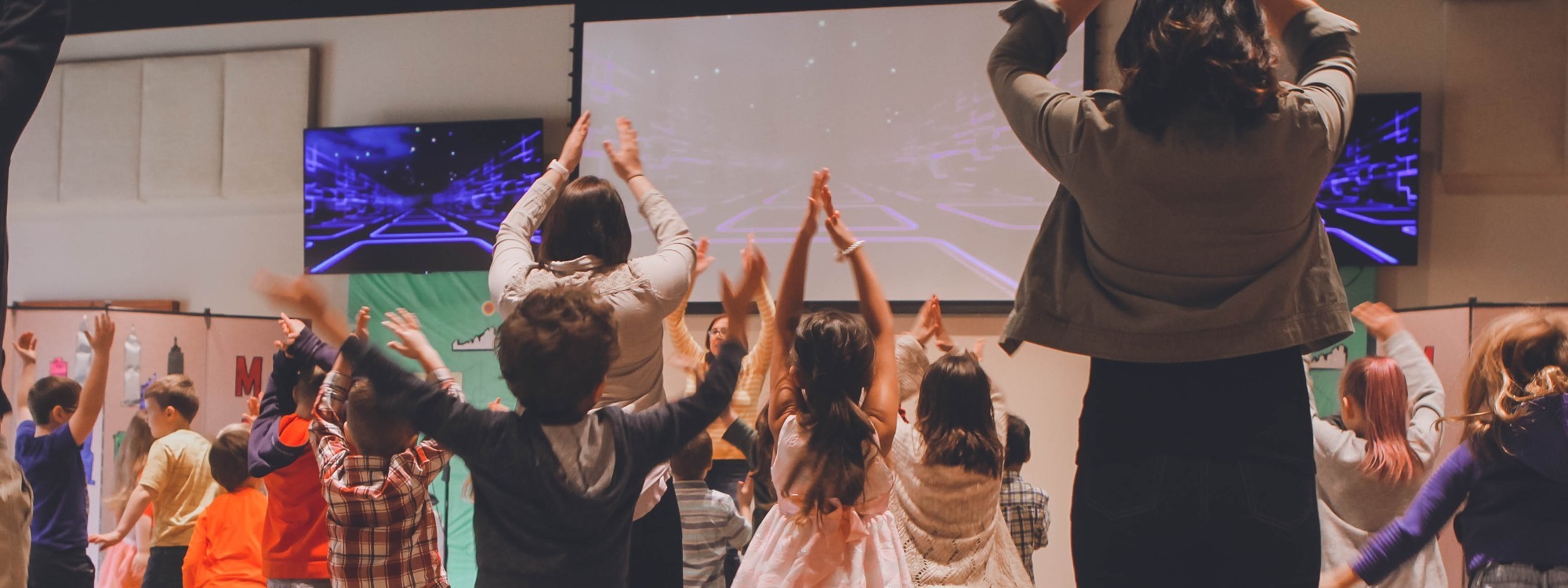
For kids from 4-11, we have our Kid's Club, BRBK. Activities vary but usually there is a friendly welcome, bible stories, testimonies, praying, music, craft, drama, fun games and free play.
Children stay with their parent or grown-up at the start of the service for the welcome, songs and notices. We really value worshipping God all together as a family. Part way through the service, the leader will announce that it’s time for the younger members to go to their various groups.
Please pick your children up as soon as the service finishes.
Getting Connected
Housegroups
While Sundays are a great way to meet new people, it is often in smaller gatherings that you can really get to know someone. Being part of one of our housegroups allows you to make new friends, share together and support each other. We have a variety of groups that meet throughout the week, some afternoons and some evenings. Check out Housegroups and see if there’s one that you could join, or we can put you in touch with a small group leader who will be more than happy to invite you along to their group.
Serving and Volunteering
If you want to get involved in the life of the church and help us make Sundays run smoothly, you can sign up to serve on a team.
If you want to get in touch, or have any further questions, please contact us!